Friday, June 30, 2023

A quest for belonging: My glimpse into leprosy culture

I'd never thought much about leprosy before my friend Chihui invited me to tour a leprosarium during my recent trip to Kuala Lumpur, Malaysia, but our tour set my mind to spinning. For nearly a century, the Sungai Buloh leprosarium has housed people with leprosy. It’s common knowledge that lepers have been ostracized and isolated throughout history. I've read Bible stories dozens of times about Jesus healing leprosy's "unclean" victims. But who in recent history had leprosy, and how did it redefine “belonging” for the rest of their lives?


Reading up ahead of time, I saw that Sungai Buloh (also known as the National Leprosy Control Centre) has been nominated as a UNESCO world heritage site. Completed in 1930, this compound was the brainchild of Dr. E.A.O. Travers, who sympathized with leprosy patients whom he saw confined in inhumane asylums as British colonizers enforced strict laws locking them away. Sungai Buloh was far ahead of other institutions at providing quality care with dignity for lepers, and furthering research on their disease and its treatment. It originally had 600+ buildings over 562 acres, with 2440 patients at its peak – the second biggest in the world. Today, though a medical university has built over much of the property, it remains impressive.


This self-contained community had its own post office and judicial system, with patients serving “as clerks, typists, teachers, nurses, carpenters, police officials, fire brigades, general workers and other roles.” Here, leprosy patients could settle in independent homes, grow and sell produce, receive education and skills training, socialize with other residents, and democratically run their community. Chihui, an avid gardener, first encountered Sungai Buloh when buying plants from a resident. A long line of nurseries borders the lush green property, supplementing residents' income.

We were privileged to have an outstanding tour guide devote over two hours to us one Sunday afternoon. (It’s only open on Sundays.) Cera refused our tips at the end of the free tour; it’s a labor of love for her. A Kuala Lumpur local, she offers tours in both English and Chinese. 

Cera shows us a scale model carefully crafted from clay by a resident

When we arrived, I thought there were a few other visitors, but I quickly realized they were affiliated. One, a new volunteer in training, discreetly photographed Sarah with us throughout the tour and sent them to us afterward. The other, an energetic and gregarious man, chatted with us in clear English. I was shocked when Sarah introduced him as one of the patients, Uncle Vincent Yeoh. (He created the clay model shown above.)

We ran into Uncle Vincent again at the end and asked him for a photo

“Wait, he has leprosy?” 

“Well, he’s cured now, but he arrived from Indonesia when he was ten and now this is his home.” 

In the mid-20th century, scientists discovered several drugs with some efficacy at combating leprosy. By the 1980s, they established a multi-drug therapy still used today. If patients started early enough, they could be cured after six to twelve months of a drug regimen now available for free from the WHO. While some residents at Sungai Buloh experienced significant disfiguration and/or amputation, others retained a fairly typical appearance. But with an incubation period of 1 to 20 years and lingering social stigma, leprosy is often not caught early enough. And even when it is, many like Uncle Vincent discovered that mere recovery was not sufficient for re-entry. 

Some relatives made the former patients feel like an unwelcome burden through actions like burning the returnees’ sheets after use. Cera says Chinese-origin communities felt particularly nervous about returnees. Today, 96 retirees remain, choosing to finish out their lives in the place they once lacked the freedom to leave. Here, they are valued members of a close-knit group, with their own homes, hobbies, and histories. 

One exhibit told people’s arrival stories. Most leprosy patients discovered their infection in childhood, between roughly ages 8 and 15. Leprosy (aka Hansen’s Disease, a skin infection) can’t spread except after a year or two of close contact, but people used to believe it much more contagious. Cera told us about Mr. Nordin from Pahang, Malaysia, who remained in his village throughout secondary school (years after his diagnosis) without the disease spreading to any of his friends or family. Still, community pressure could be intense, and in some cases police rounded up patients to bring them here. Some families forcibly took their children to the center. In other cases, parents wanted to hold onto their children and cover up their illness, and it was the children who snuck out. Some journeyed for weeks from remote parts of Malaysia and Indonesia, and many never saw their families again. 

We got a special tour of the art gallery, which featured many paintings reflecting on residents’ transitions to the leprosarium. I arrogantly assumed it would be on par with an elementary school hallway, just trying to give residents a pastime and a bit of art therapy to process their feelings. Their creativity, skill, and passion surprised not only me but also their teachers. One resident painted a picture of the day she arrived, when she felt distraught, abandoned and unloved by her family. Looking back, though, she recognized her family’s love displayed in her last breakfast with them – a bowl of noodle soup. Another painted her father walking away barefoot, having giving her his only pair of shoes on arrival. One woman whose hands were amputated still painted vibrant scenes and still life images, with an assistant to color in her outlines.


The bouquet and sunflower paintings are by the woman with stubs for hands 

Cera maintained a cheerful tone throughout our tour of what's been nicknamed the “Valley of Hope." I think the name is apt. This was a huge step forward in institutionalizion. Sungai Buloh deserves recognition for helping patients know acceptance and choice, finding purpose in their daily lives as well as in contributing to a cure. But even with caring administrators, dignity, medical treatment, and a close-knit community, I can't imagine the residents' trauma and sorrow. There were elements of a dystopian novel in this sunny, pleasant village. 


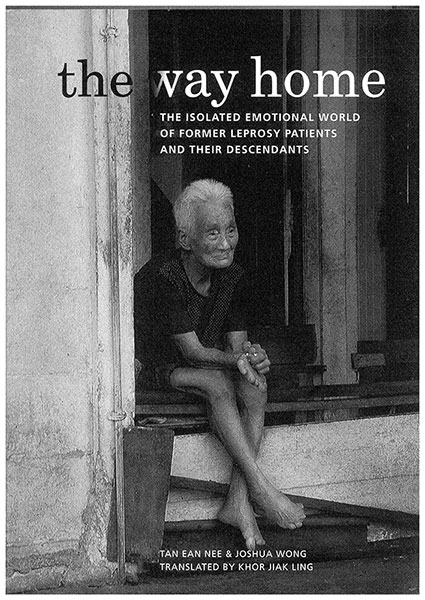
Across many ethnic groups and religions, the residents’ shared medical condition and stigma brought unity to the extent that many intermarried. That brought us to the saddest part of the tour: hearing about their children. While marriage among the residents was welcomed, for decades any children they bore were placed in “welfare homes” in a misguided effort to protect their health. The parents had a year to visit weekly and recruit friends or family to adopt their newborns, but most children ended up in closed adoptions with strangers. Researchers wrote a book called "The Way Home" and started a website to help parents and children reconnect, but many parents had already passed away. How heartbreaking that young people torn away from their parents and siblings would one day have their own children needlessly torn away from them. Starting in the mid-1980s, around when the cure was established, the policy banning children from Sungai Buloh was less strictly enforced, and some inmates managed to hide their children when officers came around to check.


Back at home, I found an interview with one resident of 40+ years. Leon Chee Kuang, a leader among the ex-patients, arrived in 1957 as a 20-something. His words sum up the impression that I took away with me.

I thought coming here would be the end of the world. Living with people in this fenced-off area, unable to go anywhere... I thought it would be hell. 

Leaving my family was difficult. They were very sad. I was their only son. 

It was a change of environment. It was a new world. Once you stay here, you become much happier. You have friends, you have a school to go to. Outside, people are scared of you. Here, we all have the same fate, so it was easier to mix around. 

I wouldn't say I 'enjoy' my life here. But life here is a lot easier. It's not a rat race like outside.
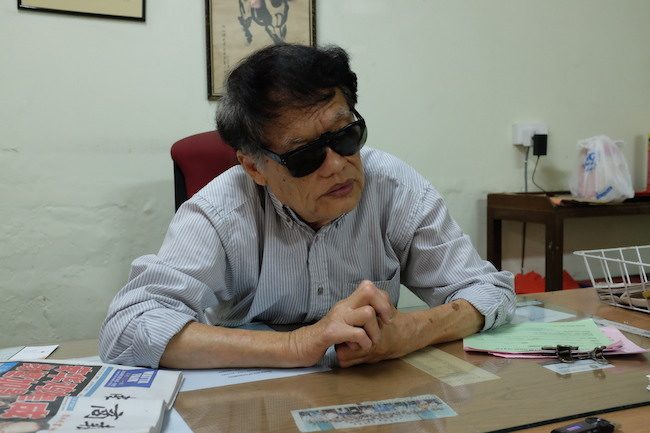
Photo from https://poskod.my/features/the-valley-of-hope/

CuriouRead more resident stories.

Wednesday, May 31, 2023

The students I almost missed knowing

These stories are shared with student permission.

Vanna was rejected when he applied to our dorm.

Financial need and distance from the nearest high school are key criteria, and he was a great candidate in those senses. The problem was that he seemed so timid and passive. Vanna had a health issue that local doctors had told him was very dangerous. “Don’t ever do strenuous activity,” they told him. 

Vanna had never helped with chores on his family farm or at his school campus at the level of his teenage peers. Not playing sports isolated him from other boys. He struggled academically, spoke with a slight lisp, and felt inferior. The leaders interviewing him were not convinced he would participate in dorm activities or complete chores like chopping wood for the fire over which students cook all their meals. He wasn’t a good fit.

Then came a plot twist: Vanna’s close friend was accepted and turned down his dorm scholarship. He pleaded with the dorm leaders to let Vanna come in his place. “He reeeally wants to come.” Vanna traveled the farthest of any student that year, from along the Thai border near the ancient Preah Vihear temple, our province's namesake. 

The dorm sent him to a Christian hospital in Phnom Penh, which told him his health condition was nothing to worry about and he was free to participate in physical activities. He worked hard at chores. In grade 11, he discovered he could hold his own in volleyball. Now a senior, he’s well-liked, a confident storyteller in Sunday School, and one of the better guitar players. Most importantly, he decided to trust in Christ in his first year (grade ten - earlier than most of his peers) and has since demonstrated growing spiritual maturity. 


Vanna went home and told his good friend Phannat about Jesus. Phannat had likewise been denied admission to our dorm, but he so wanted to go that he reapplied the next year, meaning he’d have to repeat his tenth grade year. Now in grade 11 at the dorm, Phannat has also chosen to believe and be baptized, and we’ve been encouraged by his enthusiasm, hard work, and leadership skills in several arenas.

Vanna quickly began praying for his family. His parents divorced when Vanna moved away to attend middle school, and his younger sister Chanda was sent to live with an aunt for a few years, which was traumatic. Once his mom remarried, she brought Chanda back home, but Chanda still felt hurt and betrayed. She and Vanna were not close, and they constantly bickered with each other, their mom, and their stepdad. (Dad is no longer in their lives and I don’t think they miss him.) Their mom had frightening health episodes that included trouble breathing. She believed at least some of them were caused by demons, and she spent a lot of money she didn’t have to appease the demons with offerings such as pig heads. 

Vanna wanted his family to discover the love, peace, and purpose he had found in Christ. He wanted them to experience reconciliation with each other and with God. His mom seemed somewhat interested, which upset his stepdad. He said part of his reason for divorcing his first wife was because she had become a Christian. Chanda likewise wanted to hear nothing about Jesus.

But Chanda applied and was accepted to our dorm. She told me when she arrived this past January, she was determined to ignore the Christian teachings, but they quickly grabbed her attention. “We practiced a kids’ song to teach in Sunday School. It talked about blind people seeing and prisoners coming out of darkness.” I think she means “I’ve got a river of life.” My first impressions: Chenda is petite, pale, feisty, and insatiably curious. When most of the other grade ten girls were still too new and shy to answer basic questions, Chanda was asking plenty of her own questions, extending the group discussion.

Before Khmer New Year, Chanda asked me to pray for her time visiting family. “I want to show my mom that I am different, not as short-tempered as before. I want us to have a peaceful relationship just like my relationship with Vanna has gotten so much closer since I came to the dorm. And I want to get her permission to be baptized.” I was a little nervous about her high expectations. “Relationships can take time to change,” I told her. “Don’t be discouraged if it’s gradual. And it’s great that you want to believe in Jesus, but your mom might need time to get used to the idea. You don’t have to be baptized this year.” I didn’t want her feistiness to burn bridges and add needless contention to discussions of Jesus.

They both signed up for the dorm’s two-week Discipleship Training Camp earlier this month after the New Year break, but only Chanda attended. I was curious why Vanna had skipped the camp. “My family needed income from one of us kids,” he explained. “So I worked construction in Phnom Penh.  When I signed up for camp, I didn’t know Chanda wanted to take part too. She’s newer to learning about Jesus, and I wanted her to have the opportunity.” I love this kid! 

Chanda (R) heading to Silat’s home village during the camp

Chanda said she had a great visit at home. Things were more peaceful, and both her mom and stepdad seemed to accept her newfound faith. When her mom had a health episode, Chanda was terrified it might take her life, but she prayed aloud and her mom quickly recovered. (We’re trying to send her mom to Phnom Penh now to get a clearer diagnosis and treatment plan.) During camp, Chanda eagerly listened, joined in, and applied lessons on her own. “I read from Matthew to Acts this month in my quiet times!” she reported last week. Like many there, she was moved most deeply by a talk on forgiveness - especially forgiving parents. 

Someday, Chanda says she wants to serve God, maybe as a missionary to another country like Thailand. Hey, that’s what Vanna told me last year, too! Could they go together in five years or so? Our team has been talking about what it would take to help the Cambodian church start sending missionaries, especially to Thailand, where millions of Cambodians have gone to work in farming or construction. I have no idea where their future will take them, but it’s fun to dream. 

I so easily get discouraged and cynical. This week alone, I heard about debt collectors currently hounding one volunteer’s family, a dad who just relapsed into alcoholism, and a young student in our English class who can't remember anything he learns since a tractor crash brought head trauma four years ago. His dad has had debilitating stomach pain ever since neighbors got a witch doctor to curse him four months ago. The hardship and darkness are oppressive. I hear so many stories about people professing faith in Jesus without fully understanding, getting little discipleship, and quickly abandoning their faith. The Cambodian church is so young and frail, and it might even be shrinking nationwide. I am ill-equipped to understand these issues, let alone address them.

But there are stories that give me hope. There are stories that make me think, “People are really encountering God, and He is changing them.” I tried to limit Chanda’s hope of her parents being open, but her prayers were answered despite my limited faith. Vanna was rejected by humans but chosen by God. He has already played a part in Phannat and Chanda coming to the dorm and believing in Jesus. I’m praying that for all three, this is only the beginning. And as I walk with them, may our encounters with God change me too.

Friday, March 31, 2023

Monks snuck kittens into my yard (and other conspiracy theories)

I didn't choose the Cat Lady life. The Cat Lady life chose me.

Or so I thought. After all, hadn't I just agreed with my housemates Jim and Carolyn that this was a good season to be pet-free? Their latest dog had died a year earlier, their kids were out of the house, and all three of us were very busy, including regular overnight travels. Plus, with the big new wall the landlord built around the property, a dog no longer seemed necessary for security, and Carolyn's allergic to cats. I was fine with that - my family had a dog growing up, but I've never felt inclined to have my own pets. They're not a priority.

Besides, that big new wall didn't deter many creatures. Lizards, chameleons, skinks, and bugs were permanent residents. Cows wandered in to graze on crabgrass and rotting mangoes. The neighbors' stealthy cats, raucous roosters, inquisitive dogs, and floppy-eared rabbits regularly paid our yard a visit. Toads snuck under the door to poop in our dining room nightly. While gardening one day, someone moved a rock and uncovered a mother scorpion with dozens of babies on her back. We had plenty of animals around.

Jim first documented their presence

So I barely blinked when three little kittens showed up last August. I savored their cuteness and snapped a few photos, but they didn't seem like pets any more than the scorpions. Until they stayed all day, and the next day, and the next.

We realized these kittens, around four weeks old, weren't yet venturing far. They had not journeyed together to our yard without human assistance. The options? A neighbor. Anyone in town who had noticed our spacious green yard. Maybe someone who thought that since Cambodian pagodas always take in and care for stray animals, Christian missionaries might be willing to do the same. Should we drop them off at the local pagoda like everyone else who didn't want their kittens? "If the pagoda was overrun, the monks might have brought them here," one friend theorized. So the Cat Lady life didn't choose me... but maybe monks did. 


The Gabriels' son Jake and his friend Jack were wrapping up a summer visit, and Jake was the first to put out milk and coax the kittens to feel safe around us. Soon we had designated food dishes and daily feeding times. The guys started assigning names: Frodo, Galadriel, and... Gandalf the Grey? Radagast the Brown Wizard? We couldn't agree on kitten #3's color (what's your vote?), but it became apparent that she was not the same gender as either wizard. Shelob? When this kitten was their favorite, the smallest and most mellow of the three, it was hard to name her after an evil giant spider. This dilemma highlighted the LOTR cast's limited racial and gender diversity. This kitten did not see herself represented in the dozens of characters. For months we called her "the gray one" and "the brown one" and "Gandalf" and "Radagascar" before Jim finally said, "She's so sweet, I'm just calling her Hugs." And Hugs she became. 

Galadriel's name also didn't seem to suit her well. Aloof, moody, talented at hunting, and wanting closeness only on her own terms, she hardly seemed to take after her namesake. Where were the serenity, wisdom, and gentleness? Later we watched "Rings of Power" and realized WHICH Galadriel we had living with us: definitely First Epoch. And Frodo wasn't pensive and melancholy - he's more like Merry and Pippin, loving food and fun and mischief. Anyway, Frodo and Galadriel's names both stuck, but Frodo acquired a lot of nicknames like "Frodo-Panda" and "Panda in the Neck" and "Floppy Fro" (rhymes with "Sloppy Joe") for his tendency to roll over and play when we gently kicked him out the door. In Frodo's view, all attention is good attention.

But why were they still here, when we were all avowed non-pet-owners? Carolyn's allergies were tolerable if the cats stayed outside (harder than it sounds) and if she washed her hands after touching them. Jim and I didn't mind feeding them, and Jim loved teasing them and posing them in funny situations. (They also had a knack for posing themselves without his help.) The nation's few animal shelters, 3-5 hours away, are overrun with kittens. There seemed to be just three options: rehome them, kill them, or keep them. Having a subpar survival rate in my previous Cambodian cat-sitting experiences, I wasn't sure we'd need to reach a decision. Our teammate Joel's cat had kittens in July, and all of them got sick and died by September. With all the critters, diseases, and vehicles around, it seemed like a miracle every morning to come downstairs and find them snuggled up safe and sound. 


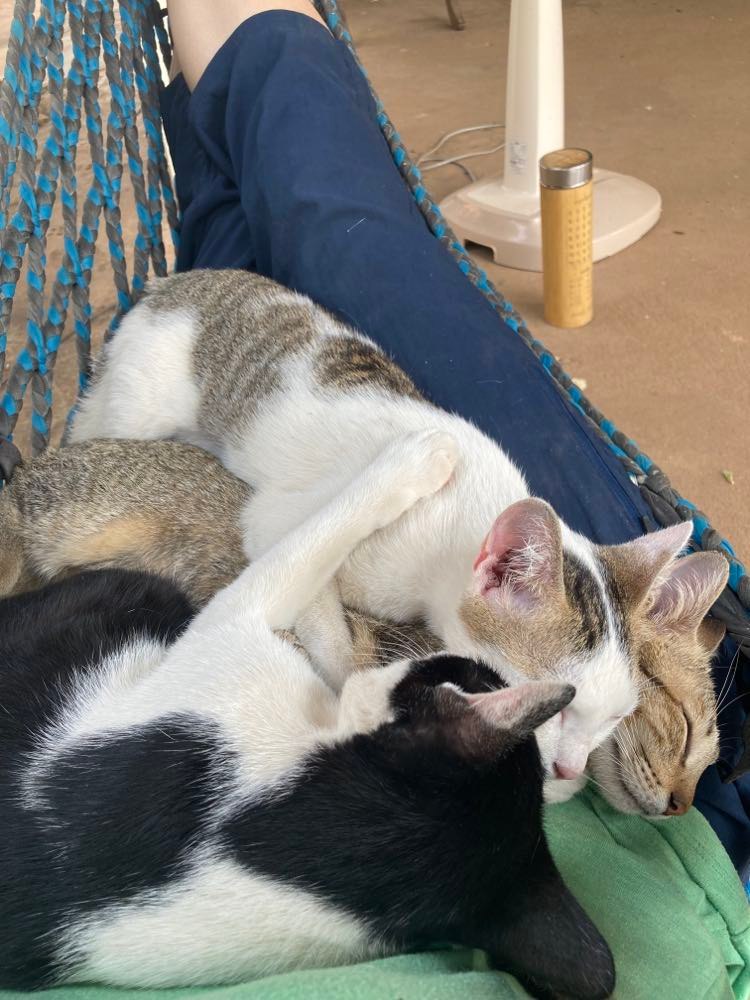
We started working on rehoming them. Cambodians generally prefer dogs over cats, since they can protect the home and be trained not to steal food from their open-air kitchens. Though nobody wanted females that might later have kittens, one family offered to take Frodo. But they had an aggressive puppy that had already killed several baby chicks, so we told them, "Wait till he's bigger." The kittens were so tiny and vulnerable, and they'd already lost their mom. Surely they needed each other. Plus, I wanted to spay and neuter them before we sent them out. In the meantime, I didn't mind them piling on me for daily cuddles in the hammock. And when we traveled, we needed someone to house-sit anyway, so it was easy enough to arrange for their food. 

I realized Jim was a much bigger pet lover than he'd let on. He suggested we keep just one cat long-term, but which one? Though the easiest to give away, Frodo was winning his heart as the most playful, following us everywhere and eager to wrestle with us and his sisters. Whenever I picked him up at the door to keep him from running into the house, he made aggressive eye contact until I paid more attention and petted him with more dedication. I felt more attached to the girls, though. Hugs was the sweetest, content to lie quietly on our laps, play with her siblings, or go exploring on her own. Galadriel meowed the most plaintively, seeking my attention until I sat or crouched down, when she'd run up on my shoulder and compulsively lick my chin. We all felt bad thinking about splitting them up into families that just wanted rat-killers (not pets), would likely hit or kick them for being naughty, and would feed them almost nothing but rice. Eventually, we decided to keep all three.

Not that we always love them. They sometimes like to bite us - not to hurt us, but to play or to get us to pet them. The older they've gotten, the more they've started doing "cat things" like depositing maimed or dead lizards and birds on our shoes. They shed a lot, especially during hot season. They run inside when we open the doors... which is often, since our office, kitchen/dining room, and bedrooms are all in separate enclosures with an outdoor hallway and stairs. (Frodo is especially good at slipping in through the kitchen door, which doesn't latch well.) It will be a miracle if nobody ever breaks an ankle en route from the kitchen to their food bowls because all three are underfoot every time. They're not smart enough to steer clear of the pickup when it's backing up, so we're always worried about hitting them. I have caught each of them standing in the squatty potty to get a drink. *gag*  

I wasn't sure if I'd like them as cats as much as I did as kittens. They're more independent now than they used to be. These days, my hammock naps might bring a cat or two, or not, whereas before they all came running every time. But they still clamor for affection a few times a day. It's still fun to watch them playing and napping together (they huddle up even on the hottest afternoons). And except for the occasional squatty potty incident, they stay astonishingly clean given all the dirt and mud around here. As mostly outdoor cats, they don't need a litterbox, bedding, walks, toys, or anything from us besides food and a little attention. I'm on board for that.

Getting them spayed was an adventure. The local vet doesn't spay or neuter but offered to administer human birth control (we declined) since medications here are unregulated and don't require prescriptions. The vet in Siem Reap required them to be at least six months old and weigh 2 kg. Kittens can get pregnant at four months, and we were advised to separate them until they could be spayed at six months, but keeping them indoors was not an option.  The last thing we wanted was more kittens here, but what else would we do if they got pregnant? "Drown them," Carolyn declared, to my shock. "It's more humane than letting them suffer as strays or be maltreated in someone's home." 

Carolyn chaperoned the cats in repurposed storage baskets
 

In January, Jim and Carolyn loaded them into their pickup truck bed when taking some visitors to Siem Reap, three hours away. We were relieved to hear the vet declare neither female was pregnant and all three were qualified for surgery. This vet was more Western, wanting them to return in five days to remove stitches and then every few months for more shots and check-ups, which was far beyond our commitment level given the distance. She even mentioned a taxi driver who could chauffeur the cats solo if needed. The cats came home pros at wriggling out of their cones, and were back to lying in the dirt within days, but they still managed to heal without infection. They might be the only spayed and vaccinated animals in our whole province! 

I've been the main feeder and cuddler of three cats for seven months and counting. I think that puts me squarely into the "Cat Lady" category. A crazy one? I won't deny that I've been a little crazy lately, but the cats have been less of a symptom and more of a therapy. It's not something I anticipated when I moved up here. I'm not sure I'd continue it if my context changed. And I'll probably never know who conspired to thrust this lifestyle on me. But I'm enjoying it more than I expected. 

I didn't choose the Cat Lady life... but I'm choosing it now. 

Tuesday, February 28, 2023

A Cambodian Christian's Buddhist funeral

The last time I saw Pu ("Uncle") Deum...

there was a joyful reunion. We both surprised each other: I had told him that our mutual friends the Arters would be visiting with their team from Phnom Penh in late January, but I wasn't sure which day we could visit his village, nearly half an hour from Preah Vihear town. Once they arrived and made a plan, I tried to call but couldn't reach him, so we just drove out to look for him, hoping he wasn't away on his farm. We were all delighted when Pu and two of his daughters were home with time to eat lunch and hang out. Sometimes, Cambodians' flexible approach to time is awfully convenient!

Pu with the older Arter boy during the 2020 homestay

It was the Arters' first visit since spending two weeks with Pu's family to learn Khmer, and Pu had never met their second son. He enjoyed reminiscing with them about their older son, who joined our final English class at Pu's house with Pu's grandsons and some neighbor kids. We gathered to pray with Pu for his wife, who had gone to Phnom Penh the previous morning to resume chemo treatments after surgery to remove a tumor last year.

The reunion, January 24, 2023

Lunch included my interns, the Arters' teammates, and Pu's grandsons

The first time I saw Pu Deum...

was in 2018, when a very drunk, friendly man kept interrupting the Sunday School class at Pu's house. Why don't the hosts ask him to leave? I wondered. Then I found out that this man WAS the host. 

Pu Deum's daughter Sinat, one of our high school students at the Plas Prai dorm in 2018, gave me permission to share her family's story in this post. She was accepted to the dorm partly because her father's alcoholism had crippled his ability to work and exacerbated the family's poverty. Pu's life was never easy, between growing up in the 1970s during a genocide, dodging nearby guerilla warfare for twenty years, losing an eye in an accident involving machinery, and subsistence rice farming. At least one of his siblings and several neighbors likewise turned to alcohol for solace, finding it a cruel mistress. 

While at Plas Prai, Sinat trusted in Christ and told her parents about him. Pu remembered seeing the Jesus film as a teenager and sensing that it answered his big questions about life, but not yet knowing any local Christians with whom to discuss its significance. Now, his daughter's words resonated deeply, and he and his wife Ming ("Aunt") Nia decided to follow Sinat and become Christians. They began studying the Bible weekly with my teammates Jim and Carolyn. 

Pu and Ming's baptism in March 2021, with their son and 2 of our dorm partners

Pu's alcoholism still distressed his family, who encouraged him to go stay with a pastor in another province who helps people detox. Pu was afraid, and twice he ran away after agreeing to go. Then he had a dream about Jesus. "Jesus is real," he often told people after that. "The moment I saw him, all my fear was gone." He lived with the pastor for several months and was mostly sober after that,  except for a relapse during Ming's surgery last year. In debt and without health insurance, Pu found the extra medical expenses very stressful. With his wife five hours away, Pu succumbed to temptation, but stopped again after another brief stay at the pastor's house.

Ming and Pu studying the Bible in May 2022

Pu helping the World Team interns recruit English students, November 2022

Pu, Ming, Jim, Carolyn, and Sunday School volunteers meeting at Pu's home in January 2023

The day after I last saw Pu Deum...

Pu started drinking again. He'd voted last year against his wife getting the recommended chemo after surgery, feeling it was too expensive and unnecessary. But his daughter Sinat realized the chemo's importance and had recently promised to share the cost... a cost which still paralyzed Pu with anxiety. For ten days, Pu was so drunk that when Ming came home, she couldn't even tell him the tragic news that her cancer was back and had spread. Jim and Carolyn went to visit them and found Pu with a mostly-empty bottle of strong palm liquor, 25 cents a liter. Jim had to pull him out of the busy road in front of the house because Pu was too drunk to notice the oncoming vehicles. The evening of February 3, he was killed instantly in a hit-and-run.

All my teammates and the Plas Prai staff piled in the car that night to see his family. Pu's body lay draped in a sheet upstairs while half his village milled around, including his still-intoxicated buddies. Overcome with grief and shock, Ming initially said she wanted a Christian funeral for her husband, but his mom and siblings quickly took over. There would be a Buddhist/animist funeral the next day, hours after Pu's two middle children returned on the night bus from Phnom Penh. (Some of the rites I'll describe here are Buddhist; some are animist or a mix; there's a lot of variation in Cambodian practices.) 

I doubt the relatives intended any malice. Since Pu's family are the first Christians in their village, nobody there had any idea about Christian funerals. And given his sudden, violent death and Cambodians' fear of confused, agitated ghosts, I'm sure his relatives were extra concerned that his body be swiftly and properly laid to rest in a familiar way. My teammates said it might be wiser to yield. They remember someone dying years ago who was the sole Christian in his family and village, and his Christian friends' stubbornness about having a Christian funeral added to the family's grief and left a bad impression on the community. We believe Pu's funeral type has no impact on his destiny, so we could afford to be gracious. The Christians planned a small gathering to follow the Buddhist rites.

This funeral felt more intense than others I've attended. Usually, I've just been invited to the meal at a tent outside the family's home, after the rites. In the background I can hear monks chanting instead of pop songs, and the color scheme is different, and there's no dancing, but otherwise it's a lot like attending a wedding. People sit around eating and making small talk. 

But here, the grief was raw. Funerals are usually 3, 7, and/or 100 days after a death - not within a day. And obviously, Pu's death was unexpected. Ming couldn't participate in the rites happening in their front yard; she could barely stand up from weeping. Her children wept, too, on display for hours in traditional white clothes. Her son, a recent dorm graduate, felt uneasy as a Christian participating in the Buddhist ceremonies. We encouraged him with what he already knew: he had no say in the matter and was just being a dutiful child. "I have to stand there while the monks chant," he told us, "but in my heart I'm praying to Jesus." 

I missed the morning ceremony, known as howoo praleung, or "calling the soul," something I've only ever read about. Procedures and purposes vary. In this case, the achar (Buddhist master of ceremonies) tied a red string to a stick and took it to the spot down the road where Pu's body was found. He set out food for Pu's spirit and gradually pulled the red string farther and farther back toward Pu's house to bring him home. 


We arrived just in time for a procession by the achar and Pu's children with Pu's casket, from the sleeping area upstairs in Pu's home, down the stairs, out to the front yard, three times around the funeral pyre's middle level, and up to the top. The journey up the tall tower symbolizes their wish for Pu to reach heaven. This is a more expensive means of cremation; it's normally done at the pagoda's permanent facilities. Was the money recently borrowed for Ming's chemo all burning up in Pu's cremation? I later found out that it was, but the family was anticipating an eventual funeral payment of the same sum since Pu was an army veteran. It makes me sad that many Cambodians believe their loved ones' security in the afterlife depends on how much they can afford for the funeral.


The Christians and the dorm students prayed with Ming and the children and then mingled with the other guests during hours of monks chanting and funeral music amplified by massive speakers. At Buddhist events here, the crowd is not expected to pay attention - what counts is just showing up. I met some parents of our students from English and Sunday School. Many neighbors had seen the four foreign World Teamers at Pu's house over the years. Several neighbors told me, "Pu was a good man. Even if he sometimes drank too much, he never hit anybody." Pu and Ming had always said the same thing. 


The monks lowered Pu's casket so cremation could begin at 7 PM, the hour of Pu's death the night before. It started off with a literal bang as the achar and his helpers lit fireworks for several minutes that made the audience shriek, just meters away. All the local guests stood attentive during the fireworks, their hands clasped in a gesture of prayer. I'm not sure what's causing the loud moans in the video... the fireworks?... but they were seriously creepy. Combined with my fatigue, the bright flashing lights, the traditional music blasting from a smartphone's YouTube playlist, and the chanting, my American self experienced major sensory overload. 


I felt for Pu's children, who had to sit rigidly facing the pyre for hours, keeping vigil at the cremation. Normally in this part, the neighbors, friends, and relatives also stay on site until the cremation is finished; they keep busy by eating, drinking, and gambling.  Every now and then, the cremation was paused while bone fragments were removed for other ceremonies - some of Pu's bones ended up in a local river, and others in a spirit house in his yard. The Christian/dorm student contingent did some clean-up from dinner and headed home soon after the cremation started, so I can't verify people's behavior later on, but they were still orderly when I left at 8:30. 

Several dorm students asked me how Christian funerals differ. "Burial is more traditional," I told them, "but cremation is okay too. Either way, our bodies can be raised again. We sing and read Bible verses about our hope of being resurrected with Christ, but we don't have a lot of set rituals because we believe Christians are already safe with God." 

Was I actually fine with with this funeral, though? From calling the soul to chanting to carrying the casket up the tower, I wasn't sure what was happening in the supernatural realm. In trying to appease Pu's spirit and protect his surviving family, I believe the achar and monks could well have invited demons into the home. Could Ming resist them while mourning her husband, battling cancer, and losing her husband's income? (Since her cancer, Ming has been too weak to farm; she mostly does housework and watches her grandsons.) 

A soft-spoken woman with minimal formal education, Ming has never been much of an independent thinker. When Carolyn asked her, "Where is Pu?" she pointed to the spirit house. Carolyn reminded her, "No, that's just his bones. Pu is in heaven with Jesus." "Yes," Ming replied, "because he was a good person and never hit anyone." "No," Carolyn gently corrected her, "like all of us, he had sins he couldn't escape on his own. But he trusted Jesus to save him through Jesus' death on the cross." "Oh yes, that's right," Ming assented. Ming struggles to retain new concepts and stories, and given the trauma of recent events, it's not surprising that she'd revert to an old idea.

Now that the only other believer in town is her youngest daughter, age 14, I'm not sure how well Ming will withstand her village's criticism and peer pressure. We're praying for her miraculous healing, and dreading how the village might blame the family's conversion to Christianity for the suffering they've experienced. But thankfully she has some support. Last week, she and Carolyn visited her aunt's church. Her two middle children, now being discipled at our colleagues' university dorm in Phnom Penh, have a strong faith they can articulate clearly. We promised her this month that her youngest can live at Plas Prai next year when she starts high school. Under threat of being disowned, Ming allowed Pu's relatives to install the spirit house, which Christians wouldn't normally have. But while Buddhist relatives leave offerings there, she and her Christian children choose not to participate. 


We returned two days later for a small Christian gathering. One happy surprise was discovering that Ming has a Christian aunt in a nearby village. After several songs, we took turns reading Bible verses and encouraging Pu's wife and kids. Finally, Carolyn reminded us of Pu's testimony. "He sought the truth from a young age," she told us, "and he knew when he'd found it."

"The next time we see Pu Deum..." 

she reminded us, "he will have the same giant smile that appeared every time he told his testimony. Pu is healed, happy, and smiling. We don't need to fear his ghost!"


The next week, when we went out to teach Sunday School, we were sad to find no village kids waiting for us. "They're all scared of Pu's ghost," Ming confided, pointing to the golden spirit house. We set out on foot to invite them back and reassure them that Pu couldn't hurt them. I was so thankful for our lesson that day - Jesus' ascension to heaven, where he's preparing a place for us. 

Right near the spirit house, we played Resurrection Tag, where Satan tags people and they have to sit down, symbolizing death. But when Jesus tags them, they come back to life. If Satan tags Jesus, he has to sit down for 3 seconds, symbolizing three days, but then he comes back to life and can keep resurrecting other players. "Pu is resurrected too," we told the kids. "We don't have to fear his ghost because he's safe with Jesus, just like we will be if we trust in Christ." By the end of the lesson, nearly twenty kids had joined in, and in the following weeks they came unprompted. 


My teammates and I certainly wouldn't have chosen to conclude Pu's life on earth in this way. We grieve the fragility of life here. If Cambodia were more like the US, with AA, Medicaid, closer hospitals, and guard rails around limited-access highways, Pu would almost certainly be alive today. We have concerns and questions about the future. Will Ming join her aunt and worship with a nearby congregation? Will her cancer be healed in this lifetime? Will the citizens of Bakam village end up more open or closed to Christ than before? Will some of these kids and their families one day worship God with Ming and her children? Will the Bible study fizzle out and come to nothing? 

We have no control over these questions. But we want to be obedient, and we want to pray in faith that God loves Bakam village more than we could. May the Bakam community see Christ's faithful love and power as we keep walking with this family. And may we hold on to our confidence of a joyful reunion with Pu Deum, where we'll compete with him for the biggest smile.

Friday, January 20, 2023

Redefining easy

“Kids nowadays have it so easy!” How many times have we heard that expression? I, for one, don’t think the Plas Prai dorm students have it nearly as easy as I did at their age. They do many chores, have few possessions and little spending money, live far from home, and struggle to keep up in mediocre high school classes after attending low-performing middle schools. Many of them only got electricity in their homes in the last five or ten years, and it’s still just a couple light bulbs and an outlet to charge phones. Their families have no running water, minimal furniture, a few changes of clothes, and a diet consisting mostly of home-grown rice and hot chilis. But last week I heard from a student’s mom who put the students’ hardship in perspective. 

We took a team from Davisville Church (Muggs, Holly, and Michelle) to visit Muggs and Holly’s sponsored student’s family. Mony, a Plas Prai student who just started grade 12, is the youngest of three sons. We met his parents, his maternal grandma, and his mom’s older sister, as well as a crowd of friendly neighbors. We also went past the homes of at least six other awesome Plas Prai students or graduates from his village - they've sent us quite a crop, including one current dorm staff and one current World Team intern! 

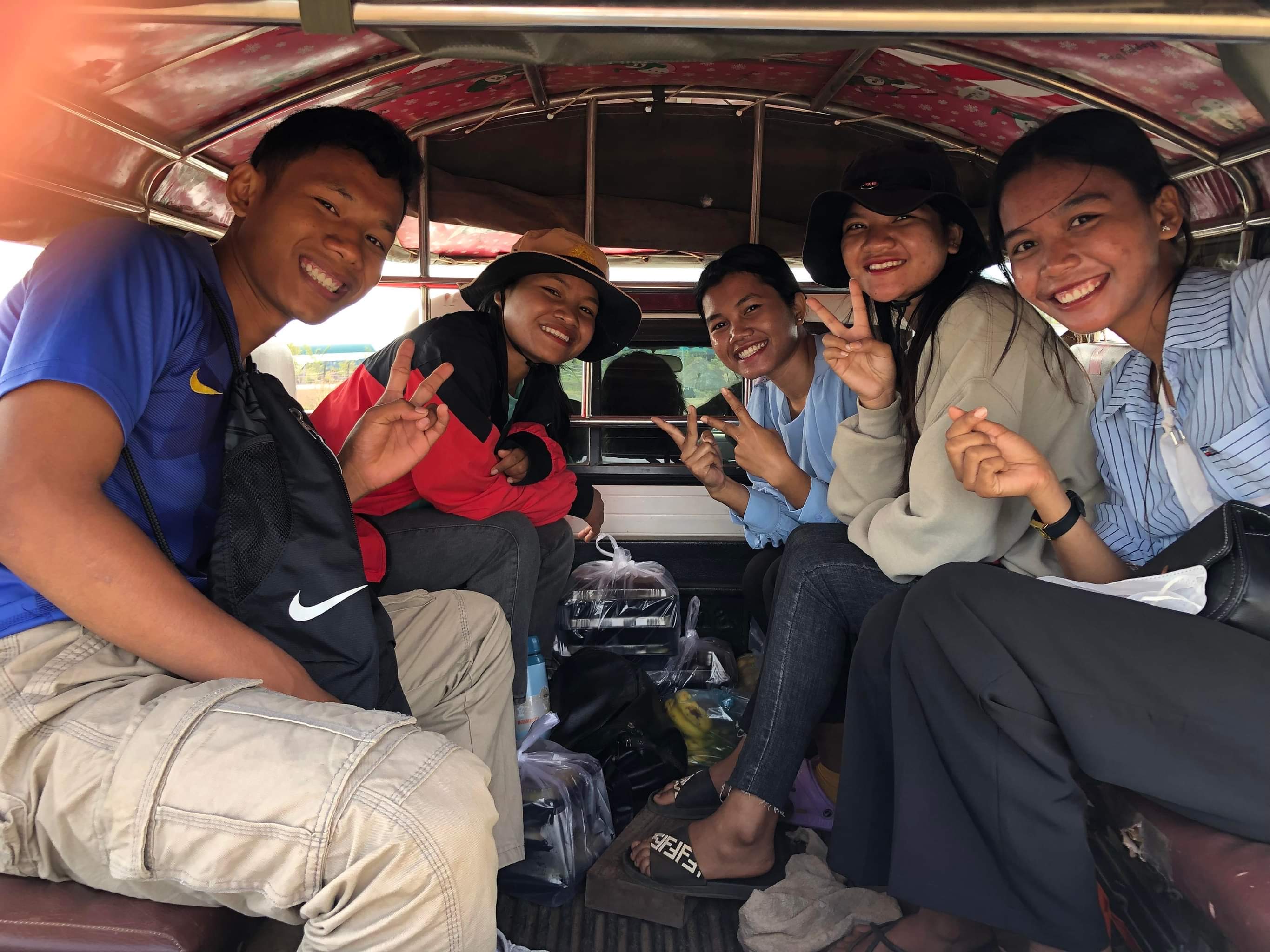
L to R: Mony, a dorm staff member, and the 3 World Team interns in the back of the truck, ready to visit Mony’s family. Visakha (center) is from the same village. 

A warm, kind hostess, Mony’s mom told us a bit of her story.

“When I was three, my father died under the brutal Khmer Rouge regime of the late 1970’s [along with about ¼ of the Cambodian population]. I was the youngest of eight children, and they had everyone on near-starvation rations, so I didn’t really start eating solid food until I was five. The Khmer Rouge assigned everyone forced labor, even children. Starting at age three, I was sent daily to pick beans and sort rice with other children. At night, I came home to my malnourished mother and she breast-fed me and gave me whatever scraps of rice she’d been able to scavenge.  

"When the Khmer Rouge regime was defeated in 1979, we kids didn’t have to work anymore, and our families wanted us to be educated. But all the teachers had been executed and we didn’t have a school building. So anyone in the village who had studied a little bit came and taught the kids under a big tree. At night, they told us to go home and teach what we had learned to our older siblings and parents, most of whom had had minimal or no formal education. Eventually a teacher came to our village, and I finished grade four at age 16. Back then, a grade 4 education was enough to go work in the nearest town, but my teacher encouraged me to ask my mom if I could continue studying. That meant moving to the next province, since our province didn’t have any middle schools. 


"My mom agreed, and she took me on foot on a three-day journey to Steung Treng province, sleeping on the road both nights. I received a government scholarship with room and board to study through grade seven in their province capital, since there were no middle schools in our province. I was the only one in our village to study past grade four. After that, I returned to our village and became a teacher for five years. I felt so privileged to have this education, and I was glad to pass on what I’d learned to my neighbors. Khmer Rouge guerrillas were still hiding out in our area, and they came and burned down a bunch of homes in our village. Our community was terrified and fled to another area for about six months. When we came back, we helped each other rebuild, just like always. 

"When I was twenty-five, my parents arranged a marriage between me and a man from our village. He didn’t have as much education but he was a hard worker. We had three sons together, and when the youngest (Mony) was one year old, my husband was run over by an oxcart that crushed his leg, back, and head. There were no motor vehicles back then, and the mud on the road was up to my thighs that time of year, but I pushed him in a cart to the nearest town with a medical clinic. It was terrifying and exhausting! Eventually we got him to Phnom Penh for further recovery. He survived, but his personality changed. He became as simple as a young child, short-tempered, and prone to violence. He used to wander off at night. The kids were afraid of him. To this day, nearly twenty years later, we have to take him to Steung Treng province [now about a 2-hour drive] every month for medications so that he’ll stay calm and close to home. He helps herd the cows [normally a child’s job] but he can’t do much to help with the rice and cassava crops. My 95-year-old mom also lives with me, and she still sweeps the yard every morning. 

Muggs and Holly meeting Mony’s family 

"It hasn’t been easy farming alone and caring for my whole family, but I am willing to sacrifice anything to see my sons be educated. Even though I could really use their help on the farm, I’m happy that they can study further than I did. Their lives are so much easier than mine. One son is in Bangkok, working as a translator now that he has finished studying. The next is six hours from here in Kampong Speu province with a university scholarship. Now Mony is in his last year of high school. I want to give him the freedom to continue studying too.” 

Mony once told me he feels a great burden to return to the farm and help his mom in his brothers’ absence. We’ll see if he does so next year, or if he is able to embrace other opportunities that might open up, such as university. All Plas Prai students are eligible for a scholarship to a six-month “Discipleship Training Program” through YWAM, and Mony is serious about his faith. He could also apply for several university scholarships. So he’ll have to weigh his hunger for knowledge against the urgency of relieving his mom’s load on the farm. But I was so moved by his mom's commitment to education and her village's spirit of helping each other. The Khmer Rouge worked systematically to destroy trust and sow suspicion among neighbors and even family members. I'm so encouraged at the way this village overcame the government's poison with their spirit of perseverance, cooperation, and investing in the next generation. 

Michelle took this photo while Mony’s mom was telling us her story

A few days later, I translated a conversation between Michelle (a member of the short-term team) and Plas Prai students. She described her kids' middle and high school schedule, and one student asked about the US high school drop-out rate. It's 5%. By contrast, Cambodia had a 20.2% high school completion rate in 2016-2017, and I guarantee that rate is lower in our students' home villages, all far from high schools. The students got quiet, and I thought they might feel discouraged or ashamed that Cambodia was so far behind the US. So I told them, "When Mony's mom was your age, there were no middle or high schools in this province. And when Cambodia gained independence from France back in 1954, there was only one high school in the whole country. Think how far you guys have come! Now, there's at least one high school in each of Preah Vihear's eight districts, and even more middle schools. Just imagine, maybe you're the only child in your family to graduate high school, but ALL of your children might have the chance to do so. You can use your education to help the next generation."

Plas Prai students still have it far from easy, especially compared to my idyllic childhood and access to excellent schools. But it's great to celebrate the progress that's been made, and to point it out to the Cambodian youth who are poised to make history. Though Mony's mom and grandma are Buddhist, I believe they have been vehicles of God's blessing to their hurting community. If this generation of youth emulates their service, courage, and perseverance, how different could life be for future generations! May Mony and his peers at the dorm follow in their footsteps to multiply hope and kindness across the nation.

Saturday, December 10, 2022

Sharing community at the 3C conference

It's been a while since I last found time to blog, so I thought I'd share this e-mail that I sent to my fellow World Teamers the other day. I expanded a draft by our global director, previewing one of the keynote addresses, so it's a mix of our ideas. 

I'm on the communications team for our first-ever global conference next summer. We're calling it 3C, which stands for Community, Collaboration, and Celebration. This e-mail focuses on Community. While its immediate inspiration is the conference, I was encouraged by reflecting in general on Christian community, and I hope it encourages you too! 


Have you ever...

... taken your church sledding on an Italian volcano?

... embalmed a body in the Philippines?

... spoken to hundreds of students at the Urbana missions conference?

... let your Cameroonian neighbors eat your dead dog?

... shared the Gospel with a witch doctor in Suriname?

Let's face it, our daily lives look pretty different. Do we really have anything in common?

We do!

Whatever our setting, skills, or personality, we have an incredible bond with each and every person attending the 3C conference.


Our unity won't come from gathering in the same resort, singing the same songs, or even wearing the same snazzy T-shirts. 

Rather, we are comrades in the epic battle of redemptive history, pointing to Christ as the Scriptures do (Luke 24:27). We are "striving together as one for the faith of the Gospel." We have common ground in being united with Christ, being comforted by his love, and sharing in his spirit (Philippians 1:27, 2:1).

The central focus of the 3C conference will be to celebrate Jesus together in community. We will discover His will, His plan for us as a community to reach the unreached in partnership with others.

Our human relationships are marred by entropy and fracturing: from the Fall, to Babel, to COVID lockdowns and worker attrition. Yet all things were created by and through and for Christ, and "in him all things hold together." He is the great Reconciler, "making peace by the blood of his cross" (Colossians 1:16-20). And he calls us - his body - to invite others into that same unity with God.


During the 3C conference, we as a World Team community will return to our core guiding principle: the Gospel. The Gospel is good news for those we serve, as well as good news for us, laboring for the harvest each day. 

And that will be the second talk of our 3C Conference:

Touched by the Gospel: We are united to Christ!

Together we will explore how the Gospel impacts and influences all that we do:

  • in relating to one another as a community, united to Christ;
  • in collaborating with others and God's Spirit;
  • and in daily celebrating God's sufficiency in our fragility and foolishness.

The presenters for the second message will remind us in fresh ways of this foundation. We will see our total dependence on God's grace to do the ministry to which he has called us.

Bearing his presence wherever we go, we are members of a community spreading to the ends of the earth. In Christ, we have enough in common to fill eternity. How powerful it will be to taste that community as we exhort each other to drink deeply of his abounding love!

"God's love is as boundless as God himself." 

Dane Ortlund, Gentle and Lowly

See you next summer!